
I asked Sam Altman about this before most people around me were even talking seriously about AI-generated content.
At a listening session in the Atlanta University Center, I had an opportunity to ask him a question. I was not thinking primarily as a chemist, professor, technologist, or someone working in emerging technology.
I was thinking as a mother.
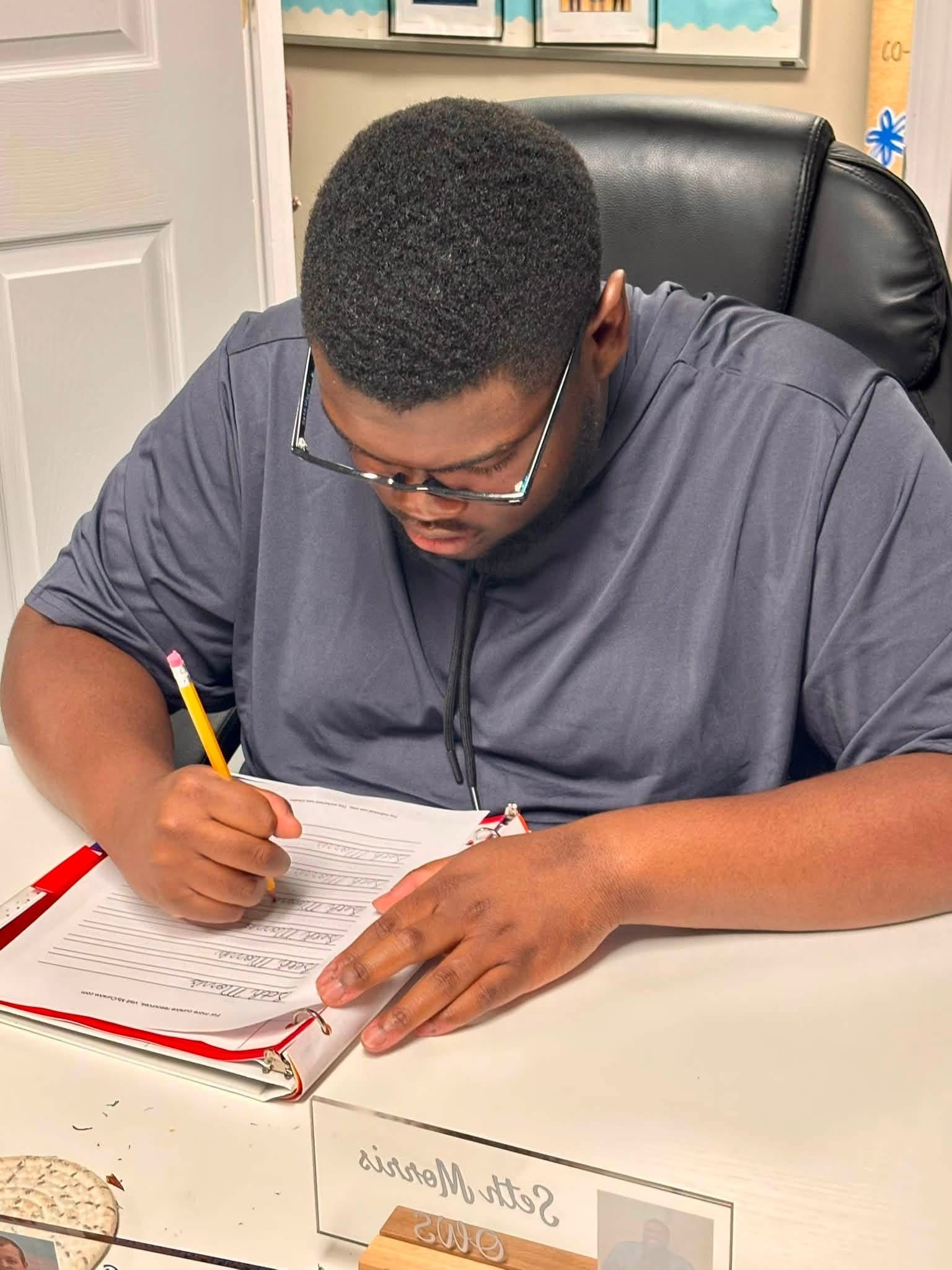
My son has autism. At the time, I was thinking about him becoming a young adult and entering a world where artificial intelligence would make it increasingly difficult to distinguish what is real from what is fabricated.
My question was essentially this:
How am I supposed to protect my child from deepfakes when he already struggles to differentiate between what is real and what is fictional?
I suggested that perhaps AI-generated content needed some kind of identifier.
A label.
A watermark.
Something that could simply tell a person:
This was made with AI.
Well...
Here we are.
And now I am conflicted.
Me asking Sam Altman a question at the AUC Listening Session in May 2023.
Anthropic Is Watermarking Claude
Anthropic recently announced that models released after August 2, 2026, will automatically watermark AI-generated text and supported files. The company made the change as the European Union’s AI Act transparency requirements for synthetic content came into effect. Anthropic is applying the watermarking at the model level, meaning the marking is not confined to a particular Claude interface or product (Mehta, 2026).
For generated files, Anthropic is using C2PA, the Coalition for Content Provenance and Authenticity’s open standard for establishing the provenance of digital content. For text, the approach is considerably more interesting. Claude’s text watermark is designed to be invisible to the person reading it while remaining machine-detectable (Mehta, 2026; Weatherbed, 2026).
The text watermark is not simply a label or a piece of metadata sitting on top of a document. The system uses a technique based on Google DeepMind’s SynthID-Text technology, subtly influencing word choices during generation to create a statistical pattern that can later be detected. The intent is to accomplish this without materially changing the meaning or quality of the text (Weatherbed, 2026).
And because the watermark is embedded into the generated language itself, Anthropic says it can travel with text when someone copies and pastes it elsewhere and may persist through some editing (Mehta, 2026).
On one hand, Mom Muhsinah wants to stand up and applaud.
On the other hand, Dr. Morris has questions.
A lot of questions.
Because I am not just the mother of someone I want protected from synthetic media.
I am also an academic who uses artificial intelligence extensively.
And those two parts of me are wrestling with each other.
My Ideas Are Still My Ideas
Let me tell you exactly how this article came into existence.
I am a wife.
I am the mother of five sons.
I am a professor, scientist, director, entrepreneur, researcher, speaker, innovator, and a woman with entirely too many things on her calendar.
And I have thoughts.
Lots of them.
I want to write more than my life allows me to write.
So sometimes I lie in my bed, open ChatGPT, and talk.
Hence the name of this blog: Blogging from the Bed.
I dictate what I am thinking. I tell AI the stories. I make the arguments. I wrestle with the ideas. I provide the experiences. Then I use AI to help organize those thoughts into something coherent enough for other people to read.
That is exactly what I am doing right now.
So is this AI-generated?
Well...yes.
And no.
The words have been organized with artificial intelligence.
But whose ideas are they?
Mine.
Whose child am I talking about?
Mine.
Who sat in that room and asked Sam Altman that question?
Me.
Who spent years becoming a scientist and eventually writing a 333-page dissertation in biomolecular chemistry?
That would also be me.
AI did not live my life.
AI did not raise my children.
AI did not earn my Ph.D.
AI did not develop these opinions.
It is helping me communicate them.
That distinction matters.
AI Assistance Is Not the Same Thing as AI Authorship
This is where I think our conversation about AI-generated content is still far too immature.
We keep trying to force a complicated spectrum into two boxes:
Human.
AI.
But modern knowledge work does not fit neatly into those categories anymore.
What happens when I write an entire article and ask AI to correct the grammar?
What happens when I dictate an article and AI adds punctuation?
What happens when I give AI 2,000 words of my thoughts and ask it to organize them?
What happens when a researcher uses AI to summarize her own notes?
What happens when a person with dyslexia uses AI to improve written communication?
What happens when a neurodivergent professional uses AI as an executive-functioning aid?
What happens when someone whose first language is not English uses AI to make her writing more fluent?
And what happens when I use AI simply because I am a busy mother of five who has something important to say but does not have three uninterrupted hours to sit in front of Microsoft Word?
Calling all of that “AI-generated” collapses dramatically different forms of human-machine collaboration into one category.
That bothers me.
And it raises a question that I do not think we have adequately answered:
At what point does transparency become a scarlet letter?
But Then I Think About My Son
And this is where my certainty disappears.
Because the mother in me keeps interrupting the academic.
I want my son to know when something is artificial.
Period.
I want him to have tools that help him navigate a synthetic information environment.
If someone creates a video of a president saying something the president never said, I want him to know.
If someone clones my voice and sends him a message saying, “This is Mom. I need you to do this,” I desperately want some technological system capable of telling him:
This is not your mother.
If someone generates an authoritative-looking “news report” that never happened, I want him protected.
For people who struggle with discerning social cues, intent, manipulation, satire, deception, or fictional representations, provenance is not merely an academic-integrity issue.
It can be a safety issue.
And it is not only my son who makes me think about this.
Then There Is My 74-Year-Old Mother and YouTube
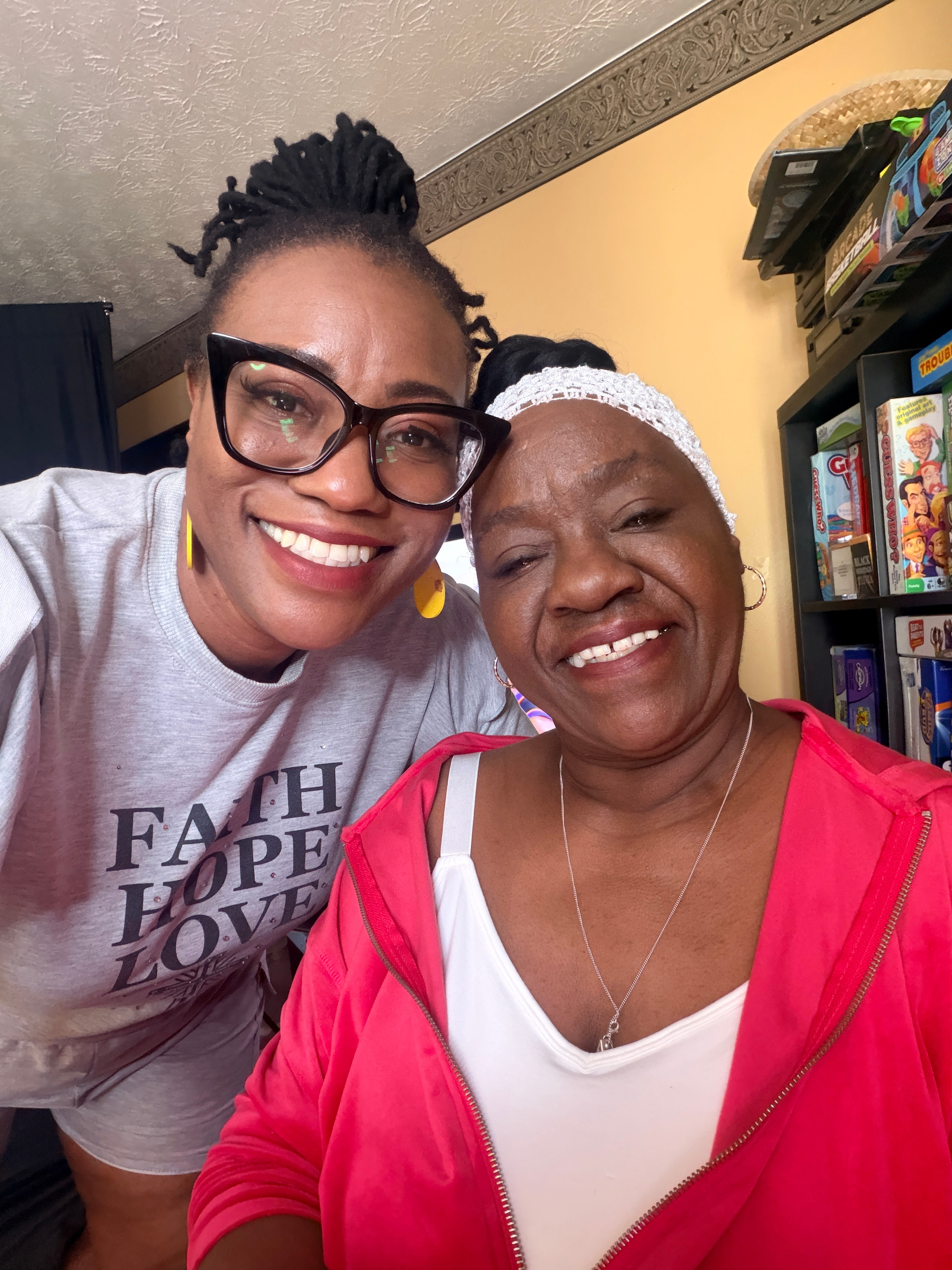
My mother lives in the world of YouTube.
Her algorithm increasingly serves her content that appears to be AI-generated, AI-narrated, AI-edited, or some combination thereof.
And she does not always know.
I find myself explaining:
“Mom, that isn’t real.”
“Mom, I don’t think that person actually said that.”
“Mom, look at the source.”
“Mom...”
You get the picture.
She is navigating an information ecosystem that did not exist for most of her life.
My son and my mother represent two very different populations, but they bring me to the same concern.
What happens to people who cannot reliably distinguish synthetic information from authentic information?
Suddenly, watermarking does not sound oppressive.
It sounds protective.
And that is exactly why I cannot simply dismiss what Anthropic is trying to do.
But a Watermark Is Not Truth
This distinction may be the most important one of all.
A watermark can potentially tell us something about provenance.
It cannot tell us whether something is true.
That distinction is fundamental to understanding content provenance.
C2PA, for example, is intended to provide verifiable information about the origin and history of digital content. OpenAI has similarly described provenance technologies as mechanisms for helping people understand where digital content originated and what tools were involved in creating it (OpenAI, 2025).
But knowing where something came from and knowing whether it is true are two entirely different things.
Human beings have been producing misinformation for thousands of years without assistance from a large language model.
A completely human-written article can be false.
An AI-assisted article can be meticulously sourced and accurate.
A photograph taken by a human can be deliberately framed to mislead.
A synthetic visualization can accurately represent scientific data.
Human-made does not mean true.
And:
AI-made does not mean false.
That is why I worry about creating a culture where an AI watermark becomes synonymous with intellectual inferiority.
We cannot allow “AI was involved” to become shorthand for “this is AI slop.”
We Already Have a Problem With AI Detection in Academia
This concern becomes especially serious in education.
Academia desperately wants a machine that can tell us:
A human wrote this.
or
AI wrote this.
But authorship is becoming increasingly difficult to reduce to that binary.
AI detection systems have also generated substantial concern because detection is probabilistic rather than an infallible determination of authorship. False positives are particularly consequential in education because an incorrect classification can turn a technological probability into an accusation of academic misconduct.
That should concern every educator.
Imagine writing at a sophisticated scholarly level because you spent decades developing expertise, only to have an automated system decide that your writing “sounds like AI.”
I wrote a 333-page dissertation in biomolecular chemistry.
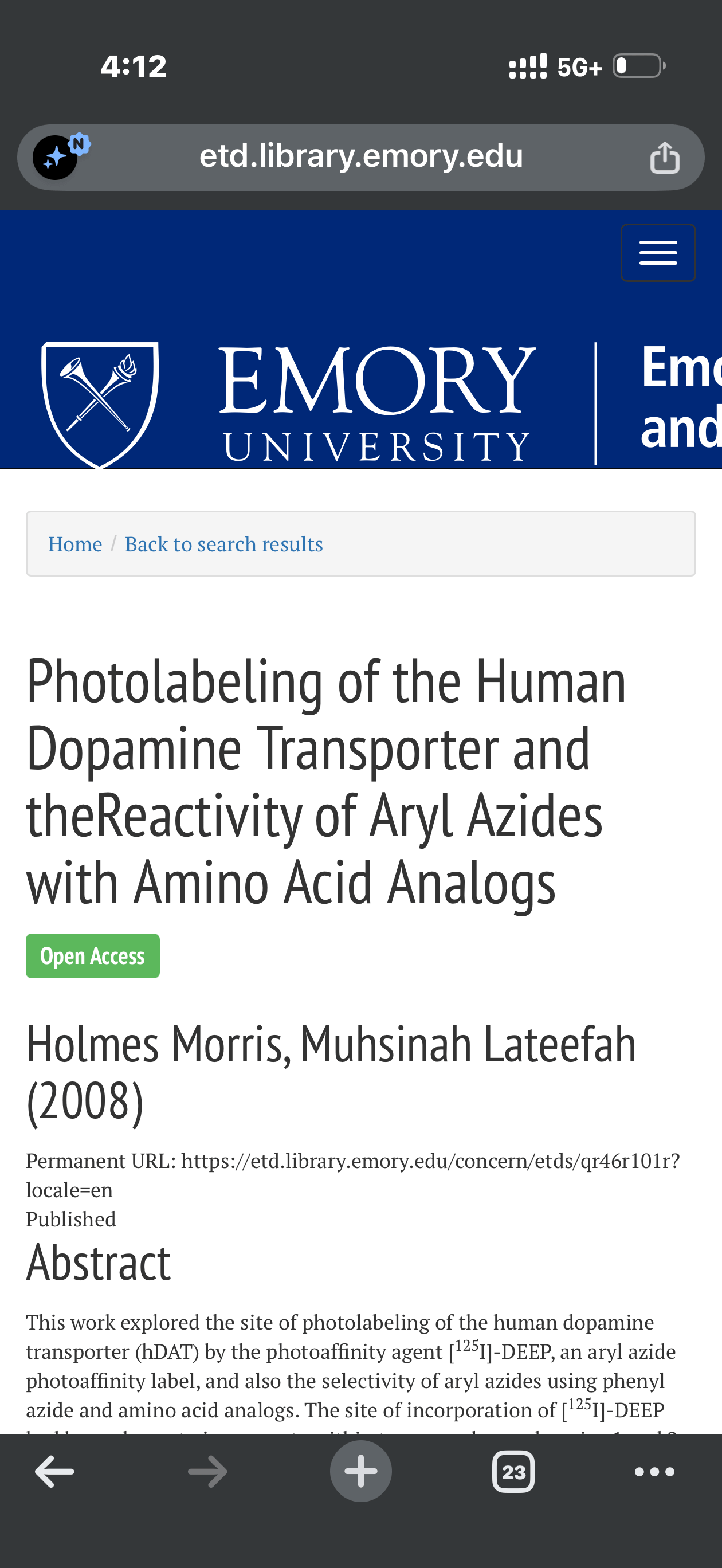
I have spent decades learning how scientists write, how scholars construct arguments, how academics organize information, and how experts communicate technical ideas.
Now imagine being told that your writing is suspicious because it is too structured, too polished, too predictable, or too technically proficient.
There is something almost absurd about where we have arrived.
Machines were trained on enormous amounts of human writing.
Those machines learned to reproduce characteristics of sophisticated human writing.
And now we are building other machines to determine whether sophisticated human writing sounds too much like the machines that learned how to write from humans.
Make that make sense.
This is another reason watermarking and detection cannot be treated as synonymous.
A watermark is intended to provide evidence about provenance.
An AI detector attempts to infer provenance from characteristics of content.
Those are fundamentally different propositions.
Even Anthropic has historically acknowledged the limitations of watermarking as a standalone accountability mechanism. In comments to the U.S. National Telecommunications and Information Administration, the company noted that watermarking could potentially certify that a particular model generated particular text, but also cautioned that watermarking could be defeated and should not be considered an independently reliable accountability mechanism (Anthropic, 2023).
That nuance matters enormously.
Maybe We Need More Than a Watermark
Perhaps what we actually need is a provenance framework.
Instead of merely:
AI GENERATED
perhaps our systems eventually need to communicate something much more nuanced:
Human authored, AI edited.
Human dictated, AI organized.
Human researched, AI assisted.
AI generated, human reviewed.
AI generated, unverified.
Synthetic image.
Synthetic voice.
Synthetic video.
Human-created media with AI modifications.
Those labels tell me something useful.
They describe the relationship between human agency and machine assistance.
Because that is the information I actually want to know.
I do not necessarily care that AI touched something.
I care about what AI did.
And I think that distinction will become increasingly important.
OpenAI has similarly supported common provenance standards such as C2PA and has embedded C2PA metadata into supported generated media. The company has also acknowledged that provenance requires multiple approaches rather than one perfect technological solution (OpenAI, 2025).
Perhaps that is where we should be headed.
Not simply:
Was AI used?
But:
What role did AI play?
What role did the human play?
And what does the person consuming this information actually need to know?
We Cannot Repeat the Social Media Experiment
We have seen this movie before.
Social media fundamentally changed childhood, politics, journalism, relationships, advertising, identity, privacy, and human attention before society fully understood what it had unleashed.
Generative AI gives us an opportunity to do something differently.
Not perfectly.
Differently.
We can think about vulnerable populations before harm becomes obvious.
We can think about neurodivergent people.
Children.
Older adults.
People with cognitive disabilities.
People with limited digital literacy.
People susceptible to scams.
People navigating misinformation.
And at the same time, we can protect legitimate uses of AI that expand human capability.
That balance matters.
Because there is another uncomfortable truth in all of this.
AI did not invent deceit.
We did.
Artificial intelligence models are built from human-created information, deployed into human institutions, and used by human beings who bring all of our brilliance, creativity, generosity, ambition, prejudice, manipulation, and deception along with us.
The technology can amplify the best parts of humanity.
Unfortunately, it can amplify some of the worst parts too.
So, Am I For AI Watermarking?
I don’t know.
And I am comfortable saying that.
I am not against it.
I am not entirely for it either.
I am for transparency.
I am for provenance.
I am for protecting vulnerable people.
I am absolutely for identifying synthetic voices, deepfakes, impersonations, and manipulated media where the potential for human harm is significant.
But I am also for human agency.
I do not want every person who uses artificial intelligence as a thought partner, editor, accessibility tool, research assistant, organizational tool, or productivity system tossed indiscriminately into an enormous digital bucket labeled:
AI GENERATED.
Because sometimes the intelligence behind the work is very human.
Sometimes AI simply helped that intelligence make it out of somebody’s head and into the world.
This blog is an example.
I talked.
AI helped me write.
But these are my thoughts.
My contradictions.
My experiences.
My son.
My mother.
My questions.
And maybe ten years from now we will look back and know whether watermarking was one of the mechanisms that helped us create a healthier information ecosystem.
Maybe we will discover that we needed something entirely different.
I cannot predict that.
What I do know is that we should be having these conversations now, while the norms are still being created.
We should not begin with the question:
How do we catch people using AI?
We should begin with better questions:
How do we help humans understand what they are consuming?
How do we protect people who are especially vulnerable to synthetic deception?
How do we preserve human authorship while acknowledging legitimate AI assistance?
How do we build transparency without turning transparency into stigma?
Those are much harder questions.
But they are the questions worth asking.
And somewhere between my son, my mother, my dissertation, and this AI-assisted blog post, I find myself hoping we are wise enough to get the answers right.
Because artificial intelligence did not invent deception.
Humans did.
AI is simply giving us extraordinarily powerful new ways to create, communicate, educate...and unfortunately, deceive.
The technology will keep getting better.
The bigger question is whether we will, too.
A Note About How This Article Was Created
In the spirit of the very argument I am making here, I want to be transparent.
This article originated from my ideas, my personal experiences, my arguments, and my dictation. I dictated my thoughts into ChatGPT and used generative AI to help organize, structure, research, and refine them into this article. I reviewed the resulting work and stand behind the ideas expressed here.
I could simply label this article AI-generated.
But I don’t think that tells you enough.
Perhaps a better description is:
Human conceived. Human dictated. AI assisted. Human reviewed.
And perhaps that is exactly the point.
References
Anthropic. (2023). Anthropic’s response to the NTIA request for comment on AI accountability policy. Anthropic. https://www-cdn.anthropic.com/257e6352c677beeffcbce24233211887173a41dc/2023.06.06-Anthropic_NTIA_Comment_v2.pdf
Mehta, I. (2026, August 11). Anthropic says it will watermark text generated by its AI models. TechCrunch. https://techcrunch.com/2026/08/11/anthropic-says-it-will-watermark-text-generated-by-its-ai-models/
OpenAI. (2025, February 7). Paris Summit update on voluntary commitments. OpenAI. https://cdn.openai.com/global-affairs/paris-summit-update-on-voluntary-commitments-20250207.pdf
Weatherbed, J. (2026, August 17). Anthropic explains how Claude’s invisible text watermarks will work. The Verge. https://www.theverge.com/ai-artificial-intelligence/980869/anthropic-claude-watermarks-synthid-text-system
👏🏾👏🏾👏🏾👏🏾